
With the rapid development of the Web3 industry, more and more practitioners are beginning to pay attention to how to smoothly transition from Web2 to the Web3 field. However, compared with the relaxed environment three or four years ago, the current Web3 industry has greatly increased its requirements for technical talents. Today, people who want to enter Web3 not only need to have a solid technical foundation, but also need to adapt to the rapid changes and high requirements of the industry. Although the entry path of Web3 is more flexible and does not require systematic training like Web2 to master all skills, a successful transition still requires strong self-learning ability and practical experience.
For Web2 practitioners, transitioning to Web3 is not a one-shot process, but there are many ways to choose from. Many people have gradually transitioned to the Web3 industry through part-time work , participating in hackathons , or project collaboration . For technical personnel, choosing the right programming language and ecosystem is also crucial. From front-end engineers to smart contract developers, the transition paths and technical learning focuses of different positions are different.
In the Web3 field, major ecosystems such as Ethereum and Polkadot have different technology stacks and application scenarios. Understanding the characteristics of these ecosystems and choosing the right direction for yourself will help developers find a suitable position in the Web3 industry. In particular, underlying infrastructure platforms such as Polkadot are suitable for those who are interested in cross-chain technology, customized applications, and blockchain underlying protocol development.
Regardless of which ecosystem you choose to enter, Web3's technical threshold and development potential provide practitioners with huge opportunities. For those who want to transform, understanding the current state of the industry, learning relevant skills and participating in ecosystem construction will be the key to successfully entering Web3.
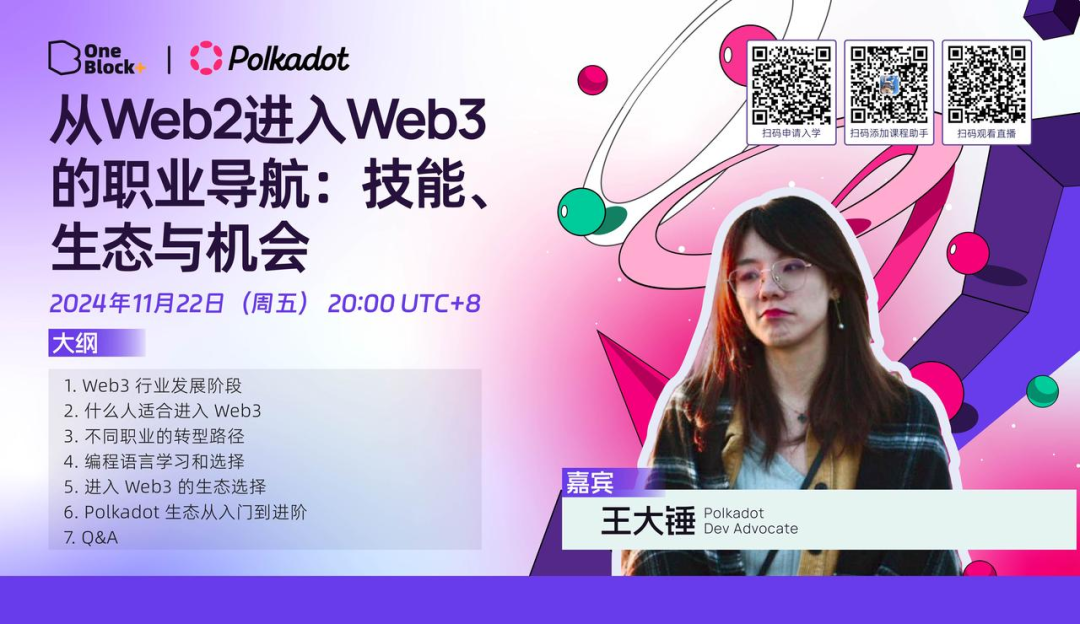
To this end, OneBlock+ invited Mr. Wang Dachui , a senior smart contract developer, to explain some soft landing suggestions on how Web2 can transform to Web3 from the perspective of blockchain practitioners. This event has been watched by nearly 800 people . Let's learn about the sharing of industry predecessors!
🎬 Details of the seminar review: https://shorturl.at/b4YlY
Who is suitable to enter Web3?
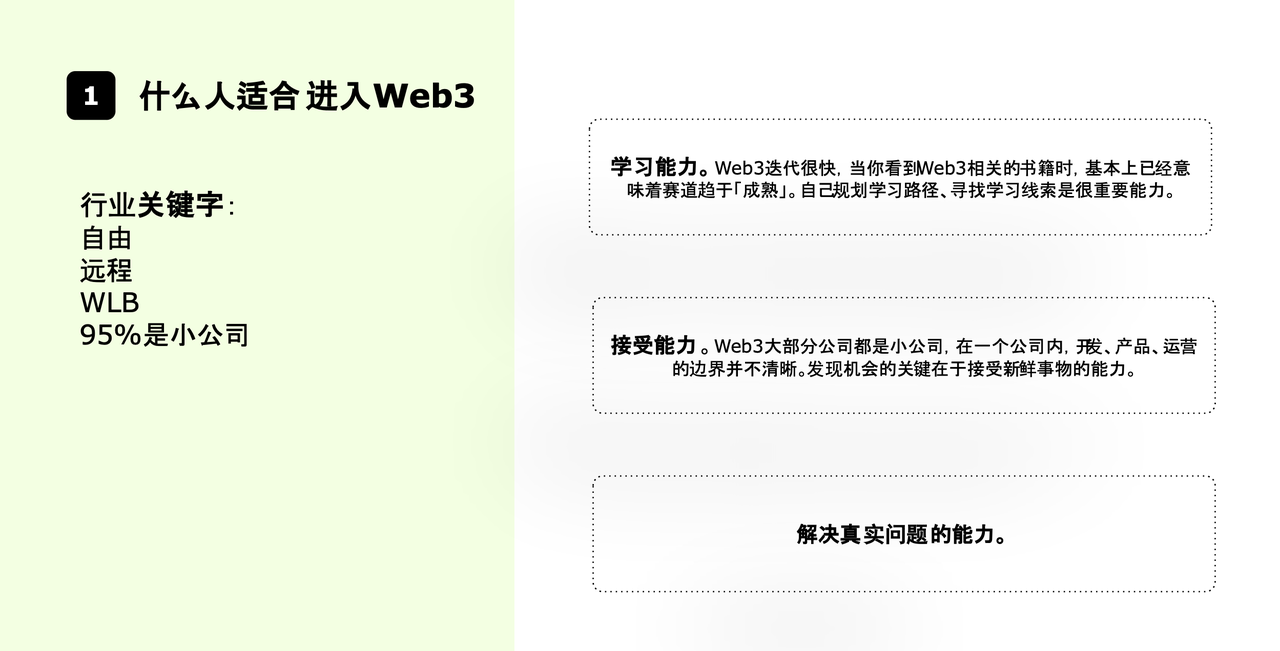
People who enter the Web3 industry should have some specific qualities, which are closely related to the characteristics of the Web3 industry. First of all, the Web3 industry is centered on underlying technology, and industry work usually requires high technical requirements and self-driving ability. Compared with the outsourcing industry, Web3 provides a better work-life balance, but most companies are small in scale, about 95% of companies are start-ups or small companies, and even some leading companies are only a few dozen or 100 people. This environment requires practitioners to be able to adapt to high uncertainty and rapid changes.
1. Learning ability
The rapid iteration of the Web3 industry requires practitioners to have strong learning abilities. In the Web2 field, people usually master technology by studying books and courses, but in Web3, technology stacks and tools change extremely rapidly. For example, the popular technologies in the past few years, from Ethereum (ETH) and Solidity to emerging technologies such as Rust, Solana, Polkadot, Aptos, Move , and now the popular TON, require developers to constantly learn new programming languages and frameworks. Each ecosystem has its own development language and tools, such as Starknet using Cairo, and these technologies are constantly updated. In order to keep up with the development of the industry, learners must have a strong desire to learn independently, and be able to filter out valuable information from a large amount of information, so as to plan a suitable learning path.
2. Receptive Ability
Learning ability is not completely equivalent to basic ability. Learning ability focuses on how to master new knowledge and apply it in practice, while basic ability refers to the knowledge reserves and technical capabilities you already have before entering Web3. In the Web3 industry, with the continuous emergence of new technologies and new ecosystems, whether you can jump out of your comfort zone, continue to learn and respond to new challenges has become the key. Especially in small companies, employees often need to play multiple roles, which requires individuals to be able to quickly adapt to changes and respond to new technologies and business needs.
3. Ability to solve practical problems
Most companies in the Web3 industry are small in scale, which means that communication and collaboration between team members are more frequent. In small companies, developers not only need to work with other technical personnel, but also need to work closely with product managers, operations personnel, etc. Therefore, practitioners need to have stronger cross-functional communication skills and be able to directly face the market to solve real problems. Unlike Web2 companies, Web3 projects are often closer to market demand. If the product cannot meet user needs or solve practical problems, it is difficult to gain market recognition. Therefore, practitioners in Web3 must have keen market insight and innovative thinking, and be able to quickly respond to market changes and adjust product directions.
The particularity of the Web3 industry requires practitioners to not only have strong technical and learning capabilities, but also strong cross-functional communication skills and the ability to cope with a rapidly changing environment. Although small companies provide more freedom and flexibility, they are also accompanied by higher uncertainty. Therefore, the ability to continuously learn and solve practical problems has become one of the most important qualities in the Web3 industry.
Transition paths for different professions
As Web3 matures, it is no longer the initial exploration stage of three or four years ago, but has become the core of many companies’ business. At present, Web3 companies have basically clarified their development direction and employment standards, which puts higher requirements on job seekers.
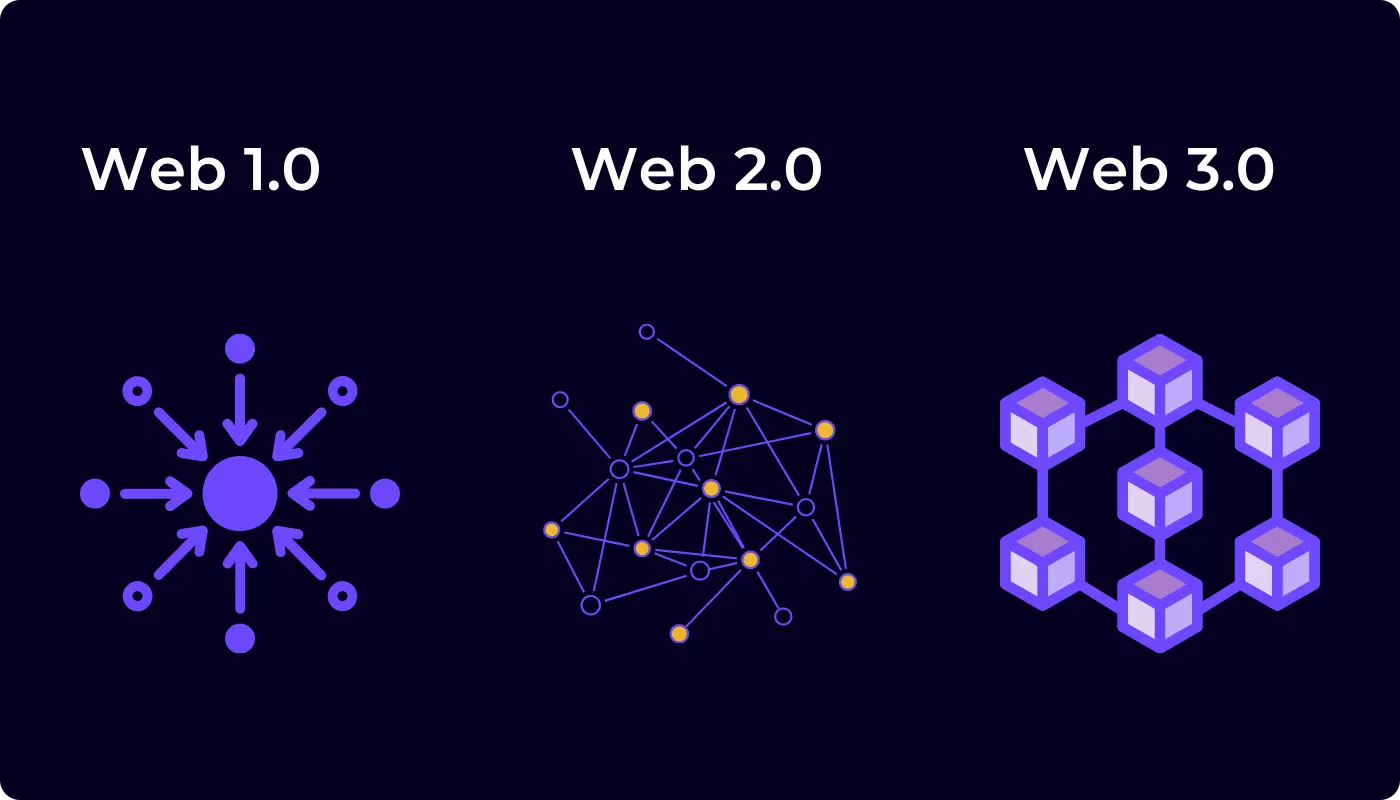
For large companies, recruitment often focuses on directly meeting job requirements, that is, they need to have strong experience and combat effectiveness. For small companies, due to limited resources, they prefer to choose talents who can get started immediately rather than train new people. However, there are exceptions - getting to know and join companies through community channels has become one of the important ways to enter the Web3 industry. Web3 companies prefer to recruit through the community because this method has a lower threshold and pays more attention to the candidate's potential and integration into the industry . Community members are highly recognized for their willingness to actively participate and learn, and are regarded as ideal candidates who can adapt to the entrepreneurial culture. In contrast, traditional job search channels have stricter requirements for beginners, making the community an effective shortcut for many people to enter the Web3 industry.
Product Manager
To work as a product manager in the blockchain industry, you must master the basic knowledge before joining the company, rather than learning it after joining. Specifically, you first need to understand the basic concepts of the industry, such as what blockchain is, the functions and usage of tools such as block browsers, exchanges, and wallets. At the same time, you also need to have a certain technical understanding ability, including the system architecture of blockchain, the front-end and back-end collaboration model, and basic cryptography knowledge, such as hash algorithms and encryption algorithms.
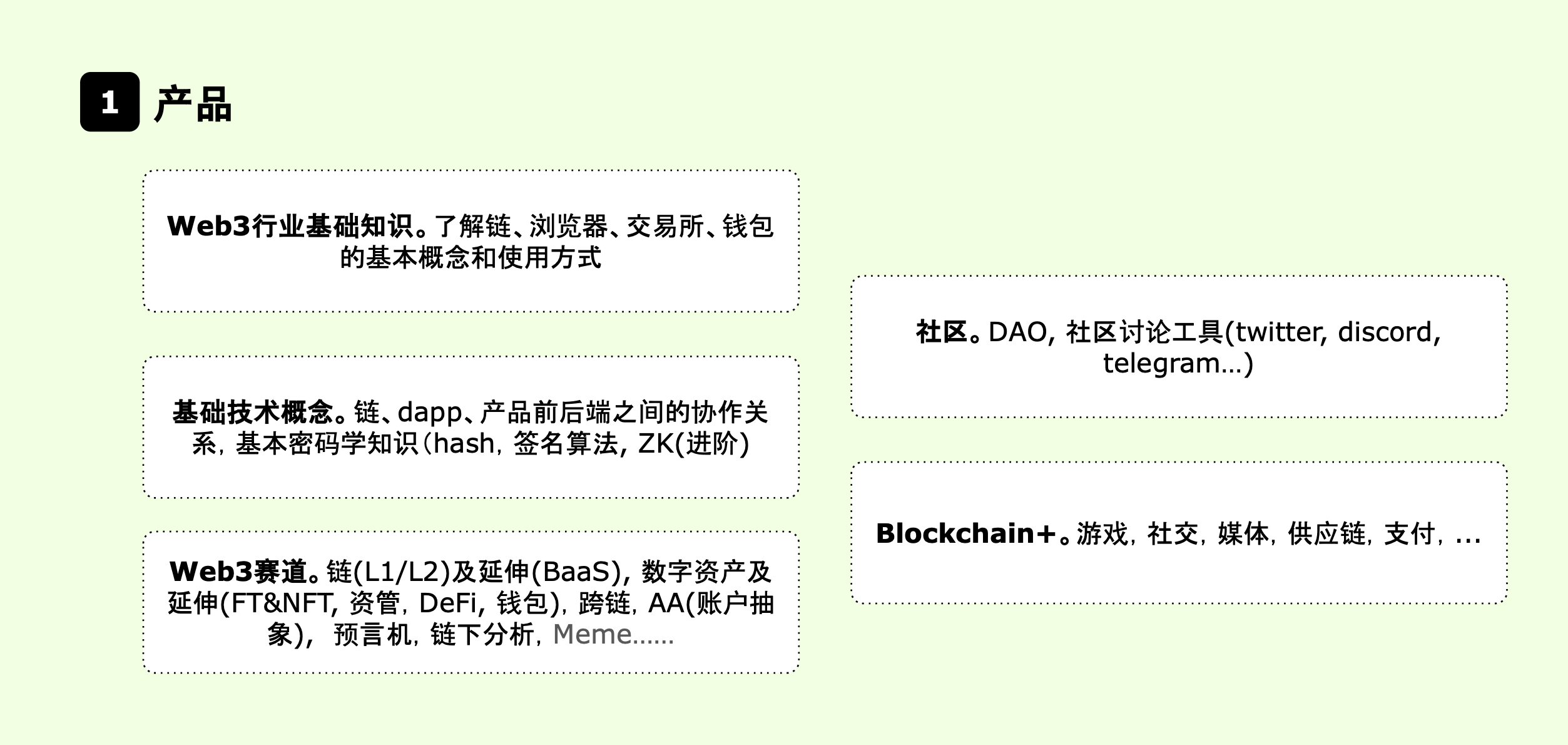
In addition, it is crucial to have knowledge of popular tracks. For example:
As the core infrastructure of blockchain technology, the performance and ecological construction of public chains are of great importance.
The enterprise service sector mainly focuses on providing blockchain solutions for enterprises
The digital asset sector covers applications such as payment, asset management and wallets
Cross-chain technology promotes the interconnection between multi-chain ecosystems
Account Abstraction (AA) optimizes user experience
Oracles expand the application boundaries of blockchain by interacting with on-chain and off-chain data
On-chain data analysis provides support for decision-making by studying capital flows and activity trends.
In addition, the blockchain industry is highly dependent on community interaction, and product managers need to be proficient in using Web3 community tools such as Twitter, Discord, and Telegram, and actively participate in and closely follow industry trends. For companies transforming from Web2 to Web3, product managers also need to master knowledge in specific areas, such as blockchain application scenarios in traditional industries such as games, social media, supply chain, payment, and healthcare.
Finally, depending on the specific technical requirements of the position, product managers may also need to have a deep understanding of certain technical fields. For example, positions involving verification functions require a deep understanding of verification technology. In short, mastering this knowledge in advance is not only the foundation, but also a prerequisite for entering this innovative field.
Front-end/Back-end Engineer
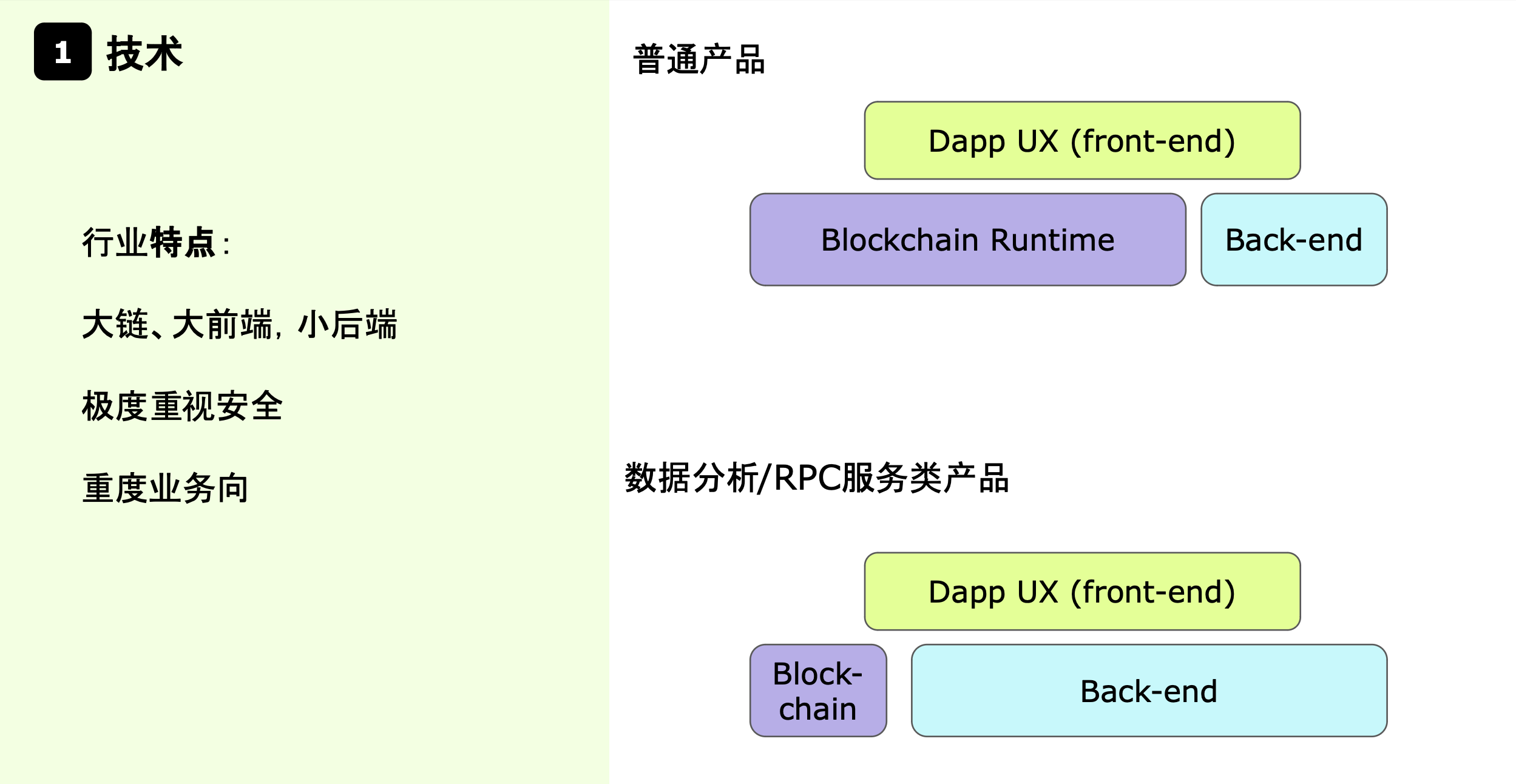
In the blockchain industry, front-end development is of great importance and has high technical requirements for engineers. This is because the interaction between the front-end and the blockchain is complex, and requires a deep understanding of the reading and operation of on-chain data and the optimization of user experience. In contrast, the technical threshold of the back-end is relatively low, and its main responsibility is to serve as a business accelerator to improve system performance through caching and read-write optimization. For most blockchain products, the business logic of the back-end is relatively simple.
1. Extremely high requirements for security
Security is the core principle of blockchain development. Most of the products in this industry are directly related to funds. Unlike traditional businesses where vulnerabilities can be fixed through subsequent versions, code vulnerabilities in blockchain systems may directly lead to theft of funds or security issues, and even endanger the survival of the company. The high standards and rigorous requirements for code quality reflect the blockchain industry's high attention to security.
2. Emphasize overall business awareness
Regardless of whether they are responsible for the front-end, smart contracts or back-end, blockchain developers need to have a comprehensive understanding of the company's business. This includes an in-depth understanding of product logic, competitive product dynamics and industry trends. This global understanding is not only a prerequisite for completing technical tasks, but also reflects the blockchain industry's requirement for a high degree of integration between business and technology. This is different from traditional Web2 development, which requires relatively low business participation from each role.
3. Characteristics of technical architecture: large front-end and small back-end
A notable feature of blockchain architecture is that the chain itself assumes some traditional backend functions, such as data storage and state management. Therefore, the backend of most products is mainly used to cache data and accelerate business processing, without involving complex business logic. The combination of chain and frontend makes the technical requirements of the frontend more prominent, further strengthening the technical characteristics of "large frontend, small backend" .
However, some specific products (such as data analysis services or RPC services) rely more on the backend. In these scenarios, the role of the backend is to use the blockchain as a data source to provide analysis or high-performance access support for the product.
The blockchain industry is characterized by its high emphasis on front-end technology, security, and overall business perspective, and its technical architecture also shows a different logic from traditional industries. For practitioners, development in this field requires not only technical depth, but also a higher level of business understanding and security awareness.
operations
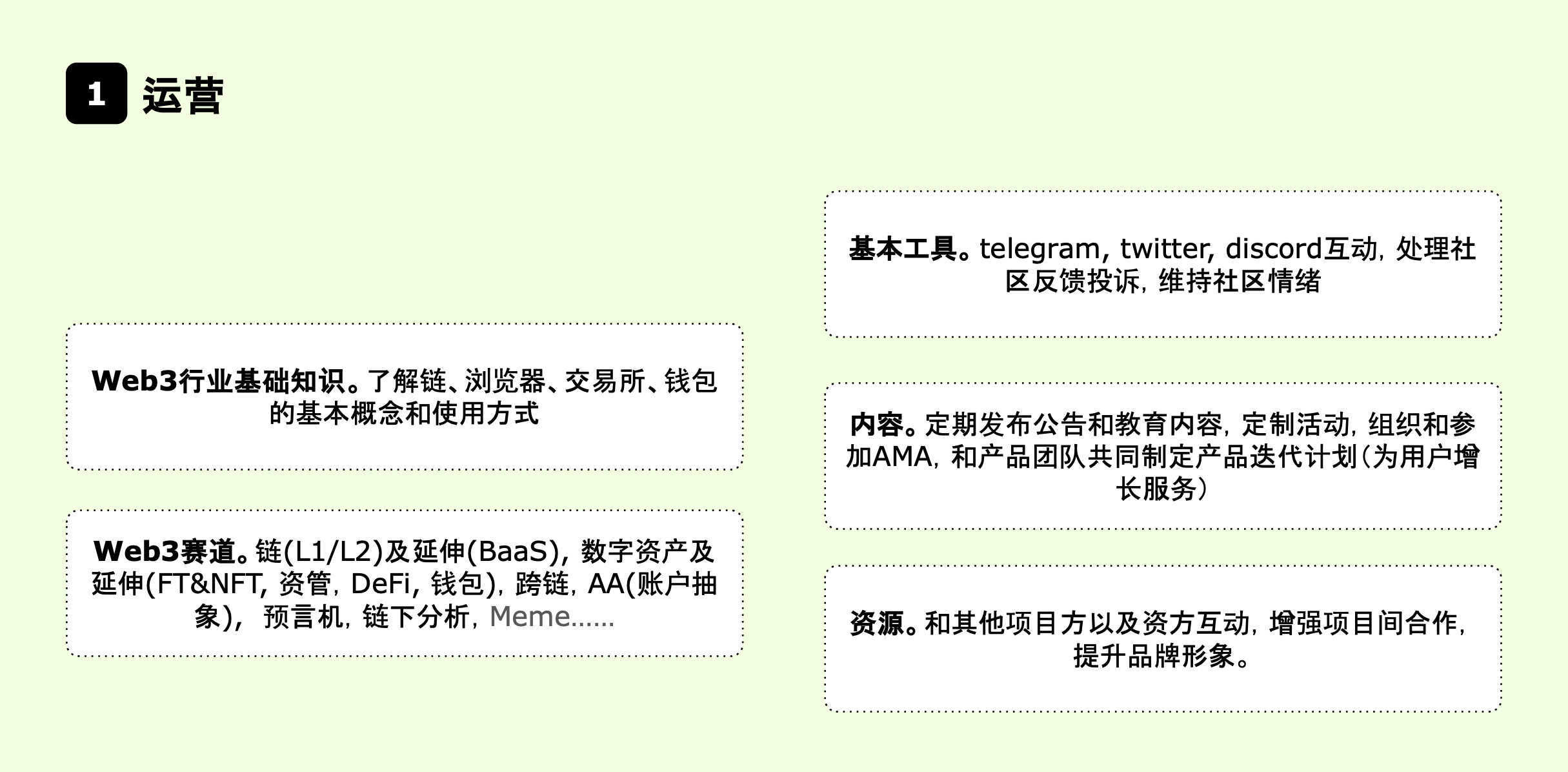
Operation is the basic link of blockchain projects and is equally important as product development. Excellent operations require a deep understanding of industry basics and related tracks, and the design and implementation of effective strategies based on user needs.
1. Primary operation: community interaction and emotional management
The focus of the junior operations job is to effectively interact with community users using tools such as Telegram, Twitter and Discord. Specific responsibilities include:
Communicate with users in the community, accompany users, and answer questions.
Handle feedback and complaints to ensure issues are resolved promptly.
Maintain the community atmosphere, spread positive emotions, and promote users' trust and recognition of the brand.
The work at this stage is mainly to cultivate user stickiness and lay the foundation for operations.
2. Advanced operations: user growth and event planning
As experience accumulates, the focus of operations roles will shift to user growth and community activity, including:
Regularly publish team updates and announcements to maintain transparent communication with users.
Develop user education content to help users gain a deeper understanding of product functions and application scenarios.
Plan and execute activities to increase monthly active users (MAU), such as online/offline community interactions.
Organize or participate in industry and company-related AMA activities, online meetings, and offline exchanges.
Work with the product team to develop product iteration plans and optimize features based on user feedback.
3. Advanced operations and BD role expansion
At the advanced stage, operational responsibilities begin to extend to business development (BD), similar to community operations. The main tasks include:
Maintain good relations with other project parties, partners and investment institutions to promote ecological cooperation.
Find new investment opportunities, increase brand exposure, and attract high-quality resources into the project.
Expand market resources and provide strategic support for enterprise development.
When operations have the ability to coordinate resources and excel in brand and partnership development, they are often able to take on higher-level roles, such as chief marketing officer (CMO).
Programming language learning and selection
If you are engaged in blockchain underlying development, you first need to be familiar with some basic components and core concepts of blockchain , such as transaction pools, consensus mechanisms, encryption algorithms, peer-to-peer networks, and virtual machines. In addition, you also need to understand the uniqueness of blockchain. For example, if blockchain provides solutions for specific fields, it may involve certain professional applications, such as decentralized finance (DeFi), NFT (non-fungible tokens), derivatives trading, etc. You need to have a deep understanding of these businesses because some blockchains integrate business logic directly in the DApp layer, while others write it into the runtime layer of the blockchain.
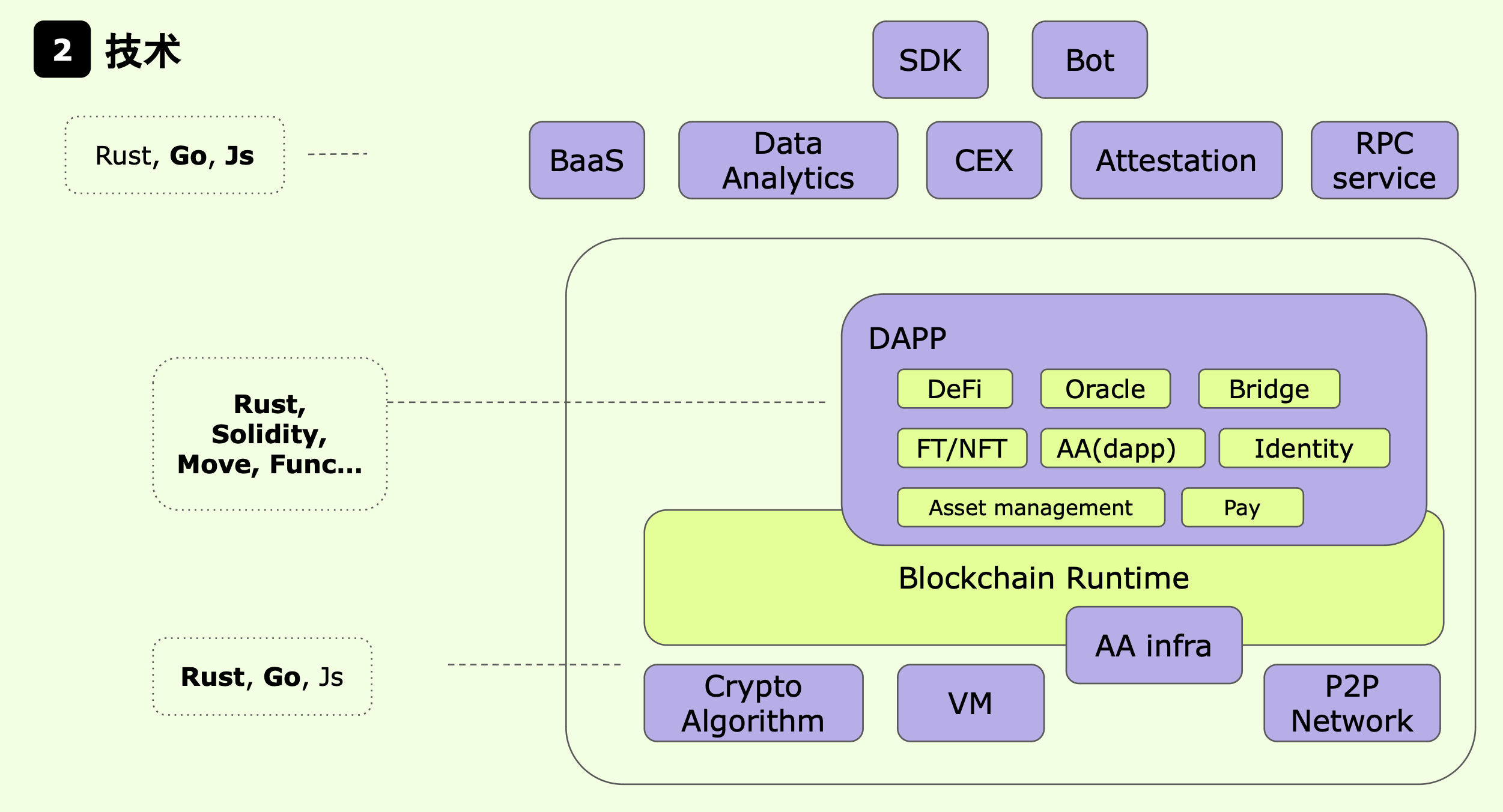
Different blockchain designs and ecosystems also affect the way of development. For example, in the Ethereum ecosystem, the business logic on the blockchain is usually deployed at the DApp layer, that is, the smart contracts running on the blockchain. Some blockchains, such as Polkadot, prefer to integrate business logic with the underlying logic of the chain. This means that as a developer, when you choose to develop a DApp (decentralized application), the requirements of the development process and tools in the ecosystem you are in will be different. The functions of DApps usually rely on blockchain smart contracts, which have their own smart contract languages. Currently, commonly used smart contract languages include Rust, Solidity, Move, and JavaScript, which are all languages used in more popular ecosystems.
In addition, peripheral services of blockchain are also part of development. For example, blockchain as a service (BaaS) is a platform service that provides blockchain infrastructure for enterprises. Since many companies choose to use some tools to simplify development, similar service providers usually provide services such as cluster management and API interfaces. Developers need to master cluster management capabilities when using these services.
In the blockchain industry, in addition to underlying development, many areas also involve on-chain data analysis, decentralized exchanges (DEX), identity authentication, and asset mapping. For example, the popular RWA (Real World Assets) track in recent years is dedicated to mapping traditional assets such as real estate, treasury funds, and other financial assets to the blockchain. This type of application is not limited to identity authentication, but also involves secondary market transactions of assets. These assets need a decentralized verification mechanism to ensure the authenticity of transactions and assets.
In addition, there is an RPC service , which provides node support for different applications to interact with the blockchain. Many blockchain projects also need to develop SDKs (software development kits) or robot services to provide convenient development interfaces and service support for blockchain projects. These services usually tend to be back-end solutions for traditional enterprises, and languages such as GO and GS are often used in development.
Depending on your interest and proficiency in a certain programming language, you can basically determine which direction of work you are suitable for in the blockchain industry. If you are more proficient in certain programming languages, it usually means that you will use these tools to provide services to companies in specific fields. Therefore, choosing the right programming language can not only help you decide the specific direction of your work, but also affect the technology stack and development path you choose.
Entering the Web3 ecosystem, choose Polkadot
Polkadot is a powerful blockchain framework. Its unique design and cross-chain capabilities provide blockchain developers with rich learning opportunities and career development paths. So, which students are suitable for the Polkadot ecosystem?

First of all, Polkadot is particularly suitable for students who have a strong interest in the underlying technology of blockchain, especially engineers engaged in the development of Web2 industry middleware. For these developers, Polkadot provides an ideal platform for in-depth understanding of the core architecture of blockchain. Polkadot's design framework is one of the leading ones in the industry. It not only helps developers to deeply understand the core concepts of blockchain, but also effectively improves their technical level. Learning Polkadot can give you a deep understanding of the various layers of blockchain architecture, including runtime and client, and how to create an efficient and scalable blockchain system through this layered design.
In addition, Polkadot's ecosystem provides many practical development tools and best practices, which will help developers benefit in other blockchain projects. Many leading blockchain projects, such as Polyga and Starknet, have chosen Polkadot's SDK as the underlying framework, which further proves Polkadot's important position in blockchain development.
Secondly, Polkadot has a very rich funding program , which is also the main reason why many people choose the Polkadot ecosystem as their entry point. Polkadot's funding program not only supports start-up teams, but also individual developers, especially those with innovative ideas. By actively participating in Polkadot's community and developer activities, developers can obtain funding support to promote the progress of their own projects. Polkadot's decentralized governance mechanism gives community participants the opportunity to directly influence the development of the ecosystem without relying on traditional central institutions.
Another advantage is that Polkadot provides developers with a very flexible customization capability through a clear layered architecture. Whether it is modifying the consensus mechanism or optimizing the transaction processing method, Polkadot can provide developers with a clear operation hierarchy. This allows developers to easily find the entry point for modification when customizing their own chains, thereby realizing the expansion of specific functions.
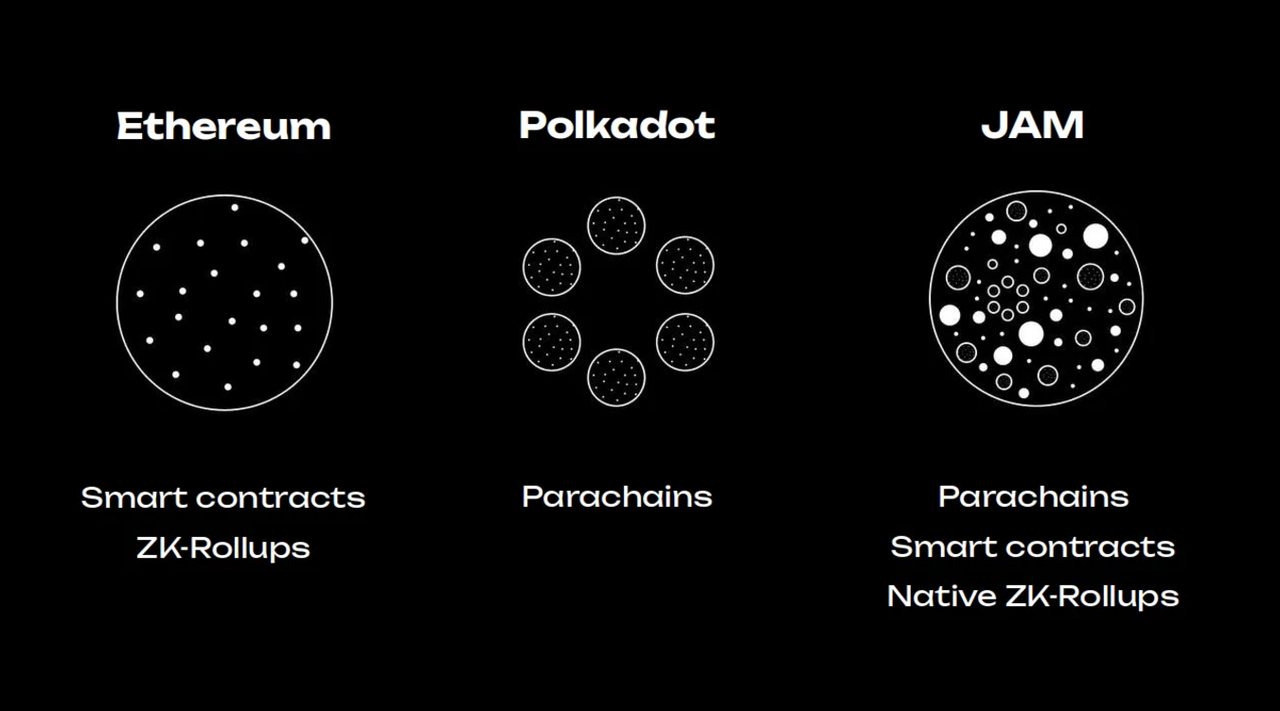
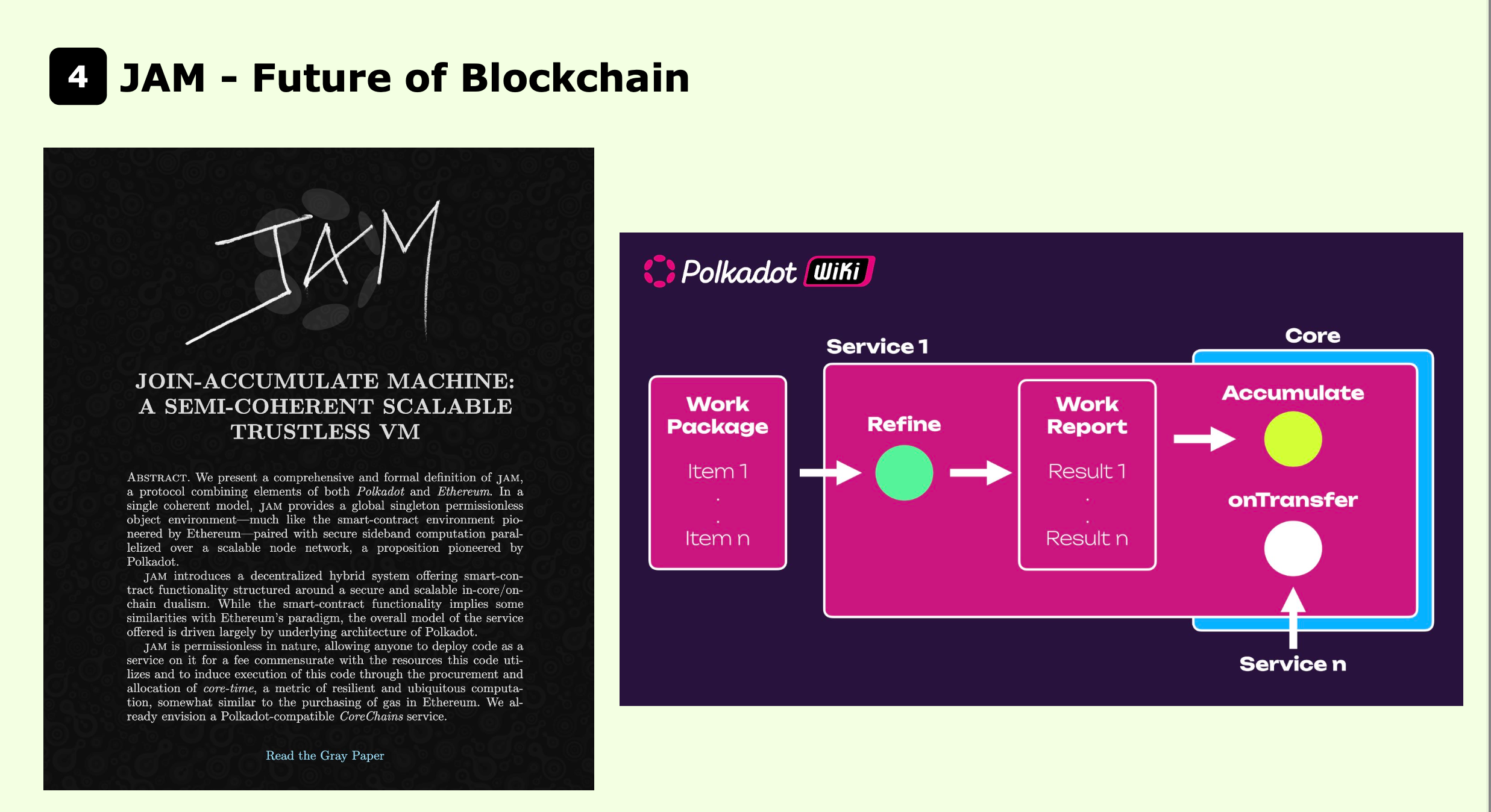
Polkadot's cross-chain design is also a highlight. As the ecosystem continues to develop, Polkadot not only focuses on the interoperability between chains, but also explores how to expand the application scope of blockchain to a wider range of fields. For example, the JAM framework launched by Polkadot aims to provide a more general and flexible computing framework for cross-chain applications. This scalability enables Polkadot to carry more complex task calculations and application scenarios in the future blockchain ecosystem.
Polkadot also provides a wealth of opportunities for developers who want to verify their ideas by participating in hackathons and other activities. Polkadot holds hackathons every year with generous prize pools around the world, and supports the overall expenses of the finalists, helping developers expand their horizons and access more industry resources. If you have an excellent project idea, Polkadot's funding program and hackathon are undoubtedly an ideal platform.
In general, Polkadot is a platform suitable for developers who pursue technical depth and are keen on cross-chain ecology. Whether from the theoretical underlying architecture or from the funding support in practice, Polkadot can provide strong support for blockchain developers. If you are interested in deepening your career in the blockchain field, Polkadot is undoubtedly a direction worth learning and exploring.
Take the first step towards Web3!
Substrate introductory course 16th issue,
Developer's Choice!
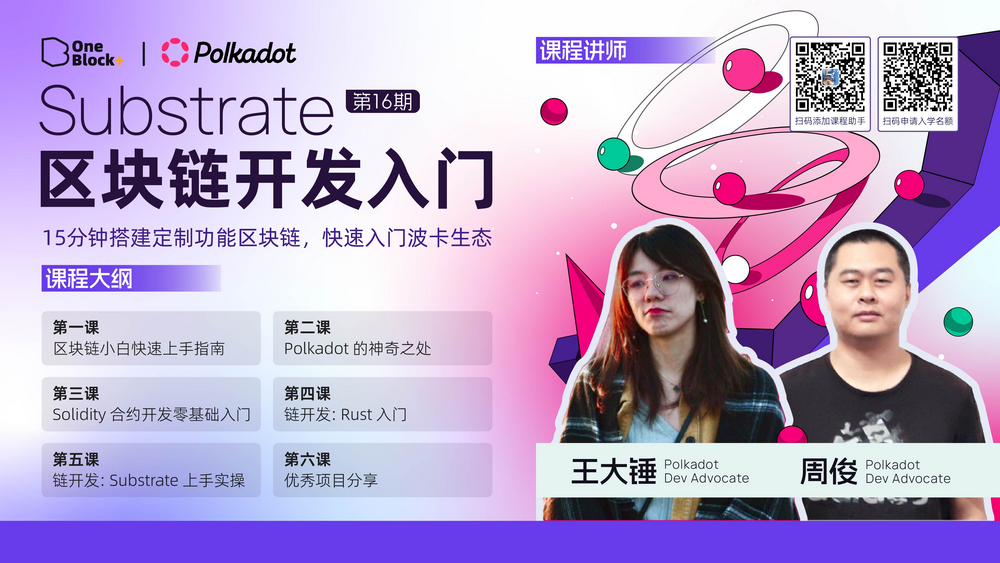
Are you a novice developer who wants to learn about Web3? Are you curious about the Polkadot ecosystem? The OneBlock+ community has teamed up with Polkadot to launch the six-week "16th Substrate Blockchain Development Introductory Course!"
The course will be taught by Polkadot Dev Advocate Zhou Jun and Wang Dachui , who will explain the core technology and development process of Substrate in depth through actual projects. So far, 121 students have joined. The course not only covers the basics, but also teaches you how to deploy smart contracts in the Polkadot ecosystem, helping students experience the construction and implementation of Web3 projects.
Click the link to learn more about the presentation!
🎬 Seminar review: https://shorturl.at/b4YlY
🟠 Course Outline
Whether you are a developer with a technical background or an explorer who is curious about Web3, this course is the best springboard for you to enter the blockchain world. Our syllabus covers:
What is Web3?
How does Polkadot differ from Bitcoin, Ethereum and other Rust public chain ecosystems?
Basic knowledge you need to know if you want to develop Polkadot applications
Setting up the development environment and tools
Hands-on: Deploy a DApp using the Polkadot smart contract development environment
Use Substrate to quickly build a chain in 15 minutes
Each knowledge point is equipped with practical exercises and interesting quizzes to help you deepen your understanding and memory and easily master those seemingly complex technical points.
🎲 Course format
One lesson is updated every week: you can study anytime, and there are five Office Hour Q&A live broadcasts in six weeks. Each lesson has a task. You can earn points by completing the task. After the course, you can also share a ¥500 bonus pool.
Online AMA activities: 1-2 online AMAs will be arranged, and the replays will be uploaded to YouTube and Bilibili for easy review.
Project sharing: We will invite high-quality project teams to give practical explanations and deeply experience the entire process of project development.
Recommended technical articles: Technical articles are provided during the course to help students understand the course content in depth.
Class group support: Provide exclusive class groups to facilitate teachers to answer questions, students to communicate, and share the latest industry news and event information.
🎫 Course benefits and benefits
1️⃣ Polkadot Ecosystem Project Guidance
We will specially invite active project teams in the Polkadot ecosystem to conduct AMA and Workshop sessions. Through these opportunities, you will interact directly with developers and learn about their real development cases and project progress in the Polkadot ecosystem. More importantly, you will have the opportunity to explore the possibility of working with these cutting-edge projects!
2️⃣ Parity official support
If you want to get more support in the ecosystem, we have also invited Parity's official experts to explain Polkadot's ecological incentive mechanism, application process and development skills. We are committed to making every student feel that the investment of time is valuable!
3️⃣ Help your Web3 career
According to feedback from past students, many learners are looking forward to career development in blockchain and Web3. Therefore, this "Sixteenth Session: Introduction to Substrate Blockchain Development" course provides two exclusive benefits:
Recruitment list release: After the course is over, the positions currently being recruited in the Polkadot ecosystem will be sorted out to help interested partners seize opportunities. Completing the course will not only add points to your resume, but may also help you find your ideal Web3 position.
One-on-one communication opportunities: Students who complete the course will also have the opportunity to communicate one-on-one with senior Web3 practitioners. Whether you want to learn how to plan your career or have questions about how to choose your first Web3 job, this will be a great opportunity to learn from industry leaders!
4️⃣ Oneblock+ Community Points Rewards
Participate in courses, complete tasks, and receive points. You will also have a chance to win the annual points award and share the 1000U bonus pool!
🔗 More details: https://mp.weixin.qq.com/s/VPgTsts9A2syK2NqulLZAw
This is not only an introductory course on blockchain, but also an opportunity to deeply participate in the OneBlock+ community and gain points and benefits!
📝 Register now: https://wj.qq.com/s2/14957929/h3bh/
📤 Add the course assistant ( 🆔 Emma@OneBlock+ ) to learn more about Substrate introductory and advanced courses!