

Written by: Sleepy.txt
On June 30, 2025, X welcomed a young product manager. His name is Nikita Bier, 36 years old. Before joining Musk's team, he had already turned his self-developed social applications into hits and sold them to tech giants for tens of millions of dollars.
Since acquiring Twitter, Musk has been determined to transform it into a super app, integrating social networking, payments, investment, and banking. However, this path has been fraught with setbacks; countless tech giants have had similar dreams, but none have succeeded.
Against this backdrop, Nikita Bier's appointment takes on a significant meaning.
In the six months since taking office, Bier has worked with the algorithm team to adjust the recommendation page, increasing the proportion of content from friends, mutual followers, and fans, changing X's content distribution logic, and bringing users' social relationships back to the core of content distribution.
Recently, Bier announced the upcoming launch of the Smart Cashtags feature. Users can mention stock or cryptocurrency codes in tweets, and X will automatically display real-time prices, price changes, and related discussions. This feature transforms X from a simple social platform into a real-time financial information platform. Users no longer need to leave X to check stock prices or switch between multiple applications; all information is presented on a single interface.
On January 16, he revised the X Developer API policy, disallowing InfoFi-like applications that rewarded user posts and revoking their API access. Simultaneously, he pushed for an upgrade to the X Creator Incentive Program.
These reforms may seem scattered, but they all point to a core objective: to transform X from a social platform into a massive ecosystem that integrates social interaction, influence, and finance.
The Birth of Dopamine Traffickers
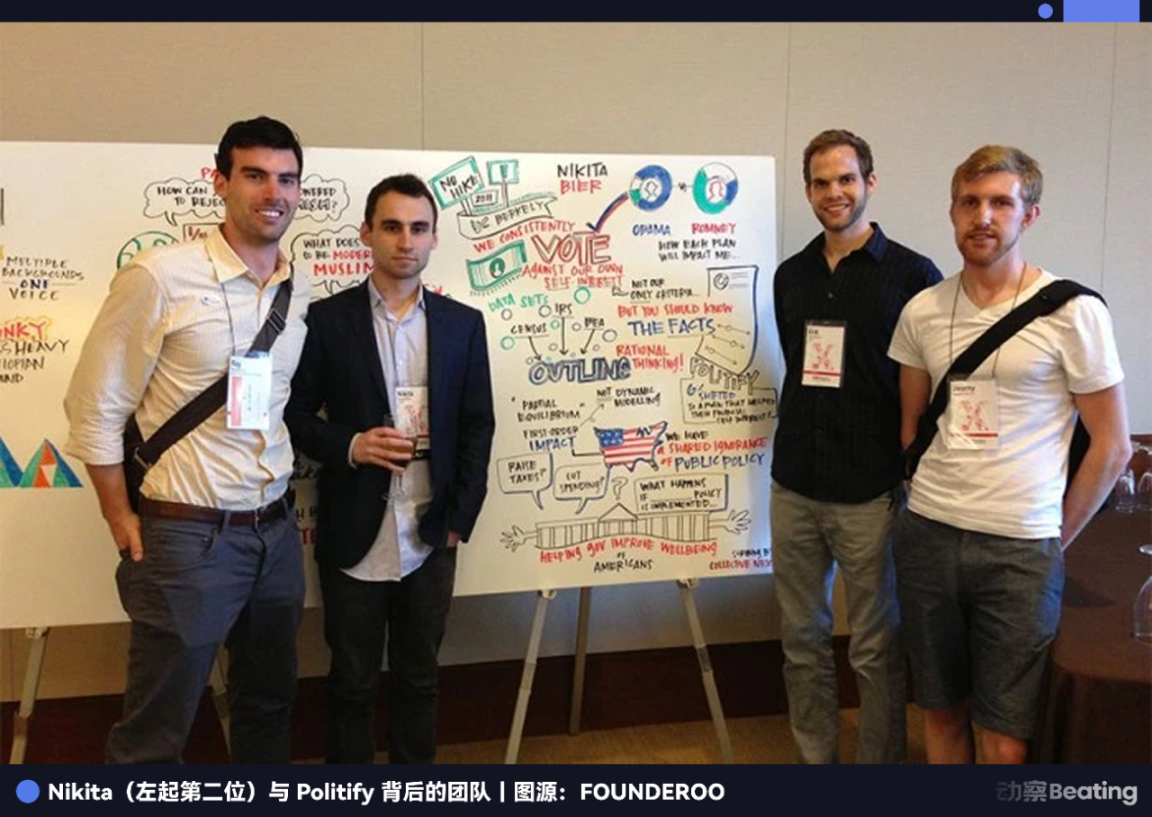
In 2012, Nikita Bier was a student at UC Berkeley. That year, he developed an app called Politify, attempting to use data and logic to intervene in American politics.
Politify's core function is a tax calculator. Users input their income and family situation, and the app calculates the actual impact of different candidates' tax policies on them. Bier believes that if voters can clearly see their own economic interests, they will make more rational choices.
This idea was a huge success during the 2012 election. Politify attracted 4 million users with zero marketing budget and briefly topped the App Store download charts. Bier believed at the time that information asymmetry in voter decision-making was the root of social problems, and that his product could solve this problem.
But reality quickly dealt him a blow. Bier discovered that despite users downloading Politify and seeing the economic benefits, they didn't change their voting choices. A blue-collar worker earning $30,000 a year, even knowing a particular candidate's tax policies were more favorable to him, might still vote for another candidate due to cultural identification.
This made Bier realize that data and logic could not overcome emotional resonance. So, from 2012 to 2017, Bier embarked on a frantic trial-and-error process. According to Startup Archive, after Politify, he and his team developed more than a dozen apps, attempting to dissect human nature from different dimensions, but none of them succeeded. The result was either an inability to acquire users or an inability to retain them.
However, each failure gave Bier a deeper understanding of human nature. He began to realize that humanity's most primal desires were not rationality, knowledge, or efficiency, but to be seen, recognized, and praised.
By 2017, they had completed their 15th product, tbh (To Be Honest).
This is an anonymous social networking app where users can anonymously vote for their friends, choosing things like "who is most likely to become president," "who is most likely to become a millionaire," and "who is most likely to save the world." All the questions are positive, and all the feedback is praise.
Within two months, tbh attracted 5 million users, with daily active users reaching 2.5 million at one point. Starting at a high school in Georgia, it rapidly achieved viral growth among high school students across the United States. In October 2017, Facebook acquired tbh for less than $30 million.
tbh's success signifies that Bier has shifted from trying to persuade users with data to driving them with emotions. He no longer seeks to solve social problems, but instead leverages human weaknesses to create addictive products. At this point, the serious entrepreneur has vanished, replaced by a masterful dopamine manipulator.
Musk's choice
In October 2017, Nikita Bier and her team joined Facebook as product managers.
Within Facebook, Bier shared tbh's growth strategy with his colleagues. According to internal Facebook documents obtained by BuzzFeed News in August 2018, Bier's team detailed how they leveraged Instagram's mechanisms to achieve rapid growth.
The core of this strategy is to exploit teenagers' curiosity and herd mentality. The Bier team creates private Instagram accounts, following all students in the target high schools, and then includes teasing captions in the account bios, such as "You've been invited to join a mystery app—stay tuned!"
Students, out of curiosity, would request to follow the account. Bier's team would then wait 24 hours to collect all the follow requests, and then make the account public at 4 p.m., when school ended, and add an App Store link to the bio.
Instagram will simultaneously notify all students that their follow request has been accepted. After seeing the notification, students will visit their account, see the download link, and then download the app.
This strategy, though unconventional, demonstrates Bier's precise understanding of human nature. If you want users to take action, you don't need to persuade them; you just need to create an emotional trigger that they can't resist.
Less than a year after the acquisition, Facebook shut down tbh's operations, citing "low usage." However, Bier chose to stay with Facebook and continue as a product manager.
During this time, Bier gained in-depth knowledge of the operational mechanisms and internal politics of large social media platforms. He saw how Facebook used algorithmic recommendations to create controversy, how it used data analysis to predict user behavior, and how it used product design to extend user dwell time.
The most important lesson he learned at Facebook was that social platforms are not for connecting people, but for creating emotional fluctuations. The greater the emotional fluctuation, the longer users stay on the platform, and the higher the advertising revenue.
In 2021, Bier left Facebook to join Lightspeed Venture Partners as a Product Growth Partner. In 2022, he and his original team launched Gas, an upgraded version of tbh, which added voting, gamification, and paid features, allowing users to pay to see who liked their posts.
Gas attracted 10 million users and generated $11 million in revenue within three months, briefly surpassing TikTok and Meta to become the most popular app in the United States. In January 2023, Discord acquired Gas for $50 million.
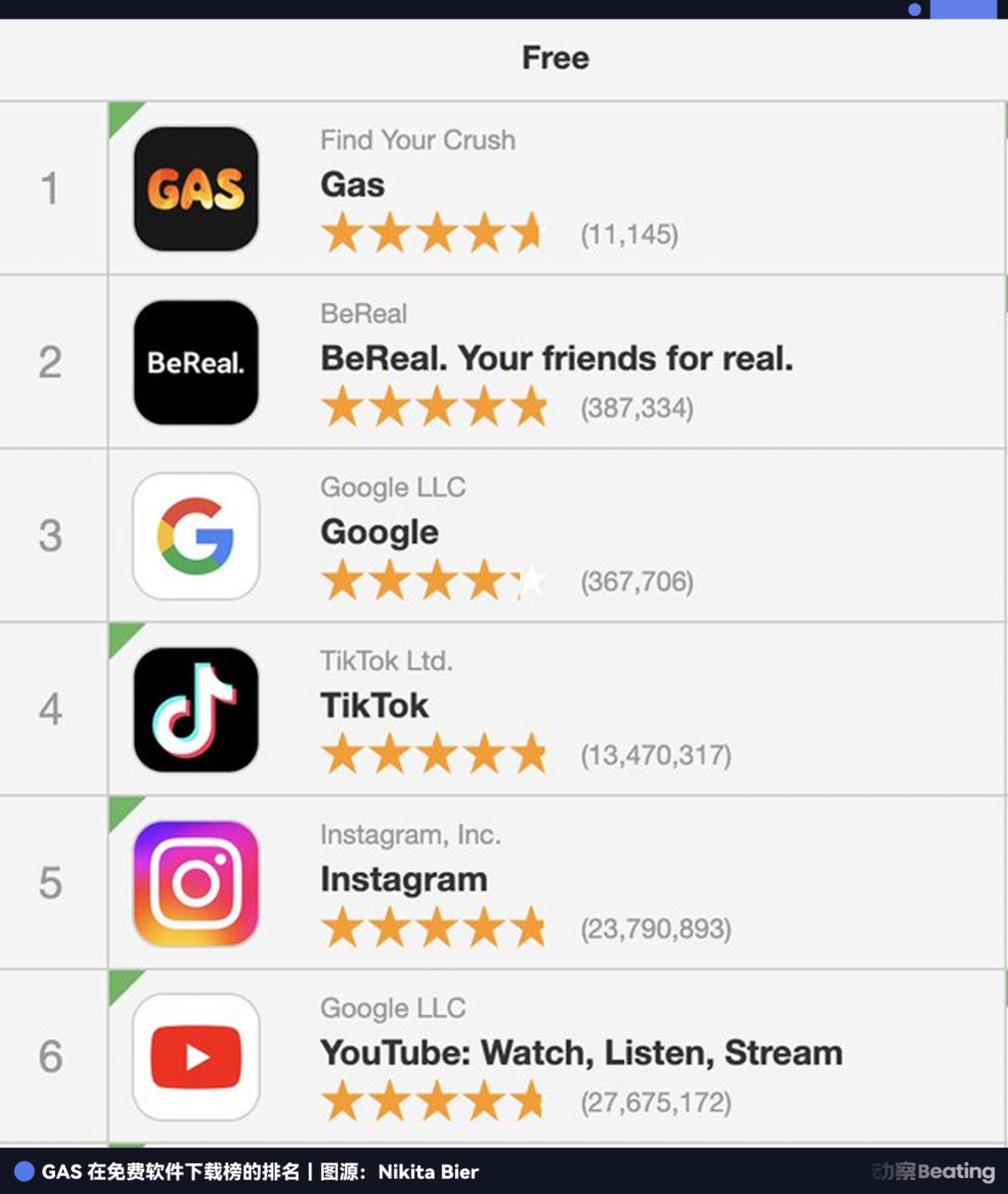
Gas's success validates Bier's key insight: the human desire for praise can be monetized. If you can create an environment where users crave to be seen and recognized, and then set a payment threshold at a crucial moment, users will not hesitate to pay.
This insight is exactly what Musk needs.
In October 2022, Musk spent a staggering $44 billion to acquire Twitter, renaming it X. In his vision, X would evolve into the ultimate closed loop of social and financial integration. But to realize this dream, Musk must overcome a crucial challenge: how to dissolve the psychological boundaries of users, allowing them to naturally engage in financial transactions while browsing Twitter.
This is actually a question about human nature. What kind of driving force can enable users to overcome the psychological barriers of trading, investing, and saving on a social platform?
Bier's connection with Musk began with a bold self-recommendation. When Musk announced the acquisition of Twitter, Bier tweeted on X: "@elonmusk Hire me to run Twitter as VP of Product." The tweet received no response at the time, but Bier didn't give up.
For the next three years, he continued to post on X, sharing his deep thoughts on product growth, user psychology, and social networks. His tweets gradually amassed a huge influence, allowing Musk to see his profound understanding of products and human nature.
So, in June 2025, when X needed a product manager who could integrate social and financial services, Musk thought of Bier. When announcing his joining, Bier wrote, "I've officially posted my way to the top," and replied to his 2022 self-recommendation tweet, "Never give up."
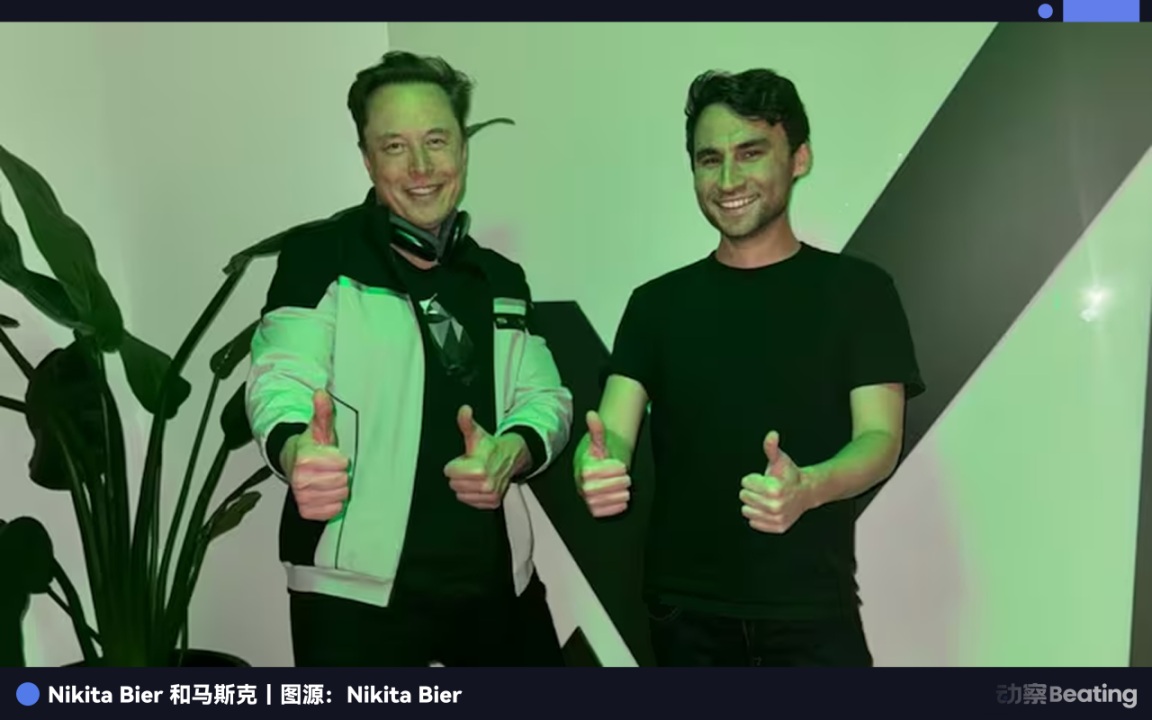
This story itself is the best interpretation of Bier's concept of "influence is currency".
Prior to joining X, Bier served as an advisor to the Solana Foundation, where he oversaw mobile strategy. During this experience, he witnessed firsthand how cryptocurrencies leveraged social media for viral growth, realizing that influence itself had become a priced and tradable financial asset.
Musk's choice of Bier stems from his first-principles thinking: the essence of finance is not technology, but trust and emotion. You must know how to leverage emotion effectively.
Bier is an expert in this field.
His series of actions at X are essentially the ultimate manipulation of emotional leverage. Take his reforms to X's creator incentives as an example. Bier understands that for a platform to continuously produce high-quality content, it must address the core anxieties of creators.
So, where we can all see, he upgraded X’s creator incentive program, allowing creators to receive more money each cycle; but where we can’t see, he is actually actively manipulating the algorithm to create gods.
In January 2026, renowned American creator Dan Koe published a long article on X titled "How to Fix Your Entire Life in One Day." Within a week, the article garnered 150 million views and 260,000 likes, becoming the most-read long article in X's history.
This is the example Bier set. By pushing an in-depth article to hundreds of millions of views, Bier sent a clear signal to all creators, especially those hesitant about investing in in-depth content on X: as long as your content is high-quality enough, X's algorithm will help you spread it.
This is a more sophisticated strategy than direct monetary incentives. It cures creators' fear of their content disappearing without a trace. Dan Koe's case convinces them that on X, deep thinking and high-quality content can be discovered and amplified by the platform.
This strategy is consistent with the psychological techniques Bier used on tbh and Gas. He realized that creators need to be seen and recognized. By establishing an exposure benchmark, Bier precisely leveraged the enthusiasm of the creator community, attracting more high-quality content to the platform, thus forming a positive ecological cycle.
Generation Z's wealth anxiety
This understanding of human nature allows Bier to accurately pinpoint the pain points of his target audience time and time again. In the financial sector, Bier is dealing with a younger generation repeatedly tormented by financial anxiety.
In October 2024, BuzzFeed published an article titled "This woman reveals how she coped with financial anxiety in her 20s." The protagonist of the article is 27-year-old Hayley, who lives in northern Colorado and works as a receptionist at an animal clinic, earning $17 an hour.
She can only work 33-hour shifts a week. Her fixed monthly expenses include: $600 for rent, $400 for car loan, $150 for car insurance, $50 for electricity, $70 for cell phone bill, $100 for student loans, and $50 for minimum credit card payments, totaling $1,420. Although she sets aside $50 for spending money each time she gets paid, this money is often quickly spent.
Hayley said, "Every expense is accompanied by guilt. I always feel that this money should have been saved. As long as the financial black hole is not filled, I will never have that basic sense of security that makes me feel at peace. Maslow's hierarchy of needs is so true. I hate this society. It forces people to survive, but deprives people of the space to live."
Hayley's story is a microcosm of an entire generation.
According to a Bank of America survey in July 2025, 72% of young people have changed their lifestyles due to rising living costs, 33% of Generation Z feel financial pressure, and more than half of them attribute it to economic instability.
Ernst & Young's research also emphasizes that financial problems are the primary factor causing anxiety among Generation Z. Furthermore, Arta Finance's 2024 report shows that financial stress has even led 38% of Generation Z and 36% of Millennials to experience a premature midlife crisis.
This anxiety fueled X's expansion of its financial empire.
After Nikita Bier joined X, he quickly initiated a series of product adjustments mentioned at the beginning of this article. But Bier's true ambition is not just to make X a financial information platform; he wants it to become a financial trading platform.
According to a Financial Times report in November 2025, X is developing in-app trading and investment features, allowing users to directly purchase stocks and cryptocurrencies on X. X CEO Linda Yaccarino revealed that Visa will be the first partner for XMoney accounts. As of December 2025, X Payments had obtained money transfer licenses in 38 US states, covering approximately 75% of the US population.
On X, every like, comment, and share is an expression of user emotion. Bier's task is to transform this emotional data into financial signals. If a user frequently likes tweets about a particular stock, X can infer that they are interested in that stock and then push a purchase link at the appropriate time.
If a user frequently comments on tweets about cryptocurrencies, X can deduce that they are a potential cryptocurrency investor and then push relevant investment products to them.
This is an emotion-based financial service. It doesn't require users to actively search, fill out complex forms, or undergo tedious verification. It simply captures users' emotional fluctuations and then provides a simple transaction entry point when emotions are high.
In an interview, Bier said, "Consumers don't choose to use a product because of functional differences, but because of the emotional resonance they experience when using it."
Similarly, the core logic of X Financialization is not to provide better financial services, but to capture users' emotions and then convert those emotions into transactions when they are at their peak.
This model is particularly effective among Generation Z. According to a research report by the CFA Institute, 31% of Generation Z started investing before the age of 18, 54% of Generation Z investors obtain investment information through social media, 44% of Generation Z investors hold cryptocurrencies, and cryptocurrencies account for as much as 20% of their average investment portfolio.
For this generation, social media is not only a channel for obtaining information, but also a place for making investment decisions. They don't trust traditional financial institutions and Wall Street analysts; they trust KOLs on social media, and they trust their own emotions and intuition. And X is precisely an amplifier of these emotions and intuitions.
The Curse of Super Apps
However, before Musk and Bier, countless giants had tried to create super apps, and they all failed.
As a former mobile phone giant, BlackBerry and its subsidiary BlackBerry Messenger (BBM) were once just one step away from becoming a super app. Executives ambitiously planned to add payment and services on top of social networking, attempting to build a digital empire for that era.
But reality was harsh; a series of poor decisions led to BlackBerry's repeated defeats in the competition. By 2013, its former 20% market share had shrunk to less than 1%, and its grand imperial dream ultimately ended in failure.
BlackBerry's failure is not an isolated case. Amazon's attempt also ended in failure. In 2014, the Fire Phone, carrying Bezos's grand vision of unifying e-commerce and social media, was launched, but it quickly collapsed. This attempt not only cost Amazon a $170 million write-down, but also became a huge blunder in Bezos's business career.
By reviewing these cases, we can summarize three reasons why super apps fail to work in the West.
First, there's the highly specialized user habit. Users in Europe and America prefer independent applications that each serve a specific purpose. A small business owner often relies on Shopify for transactions, QuickBooks for accounting, and Slack for collaboration. In their eyes, versatility often equates to mediocrity, and super apps struggle to challenge the leaders in these niche markets in terms of professional depth.
Secondly, there are stringent regulatory barriers and privacy red lines. The essence of super apps is data hegemony, while privacy protection is a Achilles' heel of regulations in Europe and the United States. The integration of massive amounts of data by a single platform will bring huge social concerns and cause compliance costs and the risk of leakage to rise exponentially.
Finally, there's the already established dominance of giants. Mature markets offer no vacuums; Google, Amazon, and Apple have long since divided up users' digital lives. New entrants to the super app market not only face functional competition but also challenge users' brand loyalty to the existing ecosystem.
So, can X accomplish what no one before him has been able to do?
X's advantages are obvious: it comes with 550 million active users, and Musk has enough money and political resources to handle regulatory challenges. Most importantly, X isn't building from scratch; it's adding financial functions gradually to an existing foundation.
This incremental approach saves users the hassle of trial and error. No downloads or relearning are required; simply clicking a button on a familiar interface integrates social and financial services.
However, X faces significant resistance. American users are already accustomed to using Venmo for money transfers and Robinhood for stock and cryptocurrency trading; they're perfectly happy with these specialized software programs, so why would they switch to X?
This is the problem Nikita Bier is trying to solve. His strategy is to integrate financial transactions into users' daily social interactions. He's not begging you to "do business" on X, but rather to casually buy stocks or cryptocurrencies while scrolling through Twitter. This seamless experience is the key to X's success this time.
However, this seamless experience also brings a new problem. When social interaction and finance are integrated, users' emotional fluctuations are directly translated into financial transactions. Will this model exacerbate irrational market exuberance? Will it lead users to make poor investment decisions when emotions are running high? Will this attract more regulatory trouble?
There is no answer to this question yet.
Emotional Alchemy
Over the past decade, we have witnessed the transformation of social media from "connecting people" to "creating emotions." We have witnessed the transformation of the attention economy from "content is king" to "emotion is king." We have witnessed the transformation of wealth distribution from "capital is king" to "influence is king."
Nikita Bier's career is a microcosm of this transformation. He went from an entrepreneur trying to change the world with reason to a dopamine peddler who exploits emotions to harvest users' desires.
This shift is actually an inevitable trend of our times. In an era of information overload and attention scarcity, rationality gives way to emotion, logic to intuition, and the long term to the short term. In this era, whoever can generate emotion gains attention; whoever gains attention gains influence; and whoever gains influence gains wealth.
This is a brand new era, an era driven by emotions, an era where influence equals wealth.
In this era, we are all products of Nikita Bier. Our likes, comments, and shares are captured by algorithms, analyzed by data, and amplified by emotions. Our attention, our emotions, and our influence are all being transformed into liquidity, wealth, and power.
In this era, emotions are the most powerful weapon, but also the most dangerous poison.